(English version below)
「歡迎回到東方小島!」
一年後我回到台灣,一起在太平洋游泳的那天,磊這樣對我說。
我們游到海灣中間的岩石,他彈著口簧琴,唱著泰雅族關於太陽的歌。我閉起眼睛聽他的歌聲,一邊感受太陽照在皮膚上的灼熱,呼吸著黏膩的鹽分、濃厚的濕氣。想起上個月我在10度的挪威,和Sondre坐在桑拿裡,「你有感覺到皮膚在發燙嗎?記得這個感受,這就是台灣的太陽喔!」我對從未去過「亞熱帶東方小島」的Sondre說。他發出了詫異的疑問聲,對他來說應該很難想像這樣的刺熱真實存在吧? 那對於從未去過「溫帶西方大陸」的磊來說呢?他是怎麼想像那片土地的?怎麼模擬雪的觸感?如何定義東方、什麼是西方?為甚麼圓形表面的世界會有中心呢?
我想這就是德國的「Tropical Island」召喚我前往的原因吧。
「媽媽,我夢到我在一個火車站,我到處走來走去,穿梭在一層又一層的月台之間,那是一個通往世界的火車站,那是一個所有大陸都相連的世界。我離你很遠,但是搭上車後,經過五站我就會回到我們的島嶼,其實也沒有那麼遠。整車的人被送往熱帶島嶼,那是一個不用搭飛機、不用搭船,就可以抵達的島嶼,一個永恆夏日的島嶼。」
穿梭在柏林火車總站,廣播的聲音在層層疊疊的月台間穿梭,德國火車DB是出了名的愛遲到,但也許大家不知道的是,他可以通往任何地方。
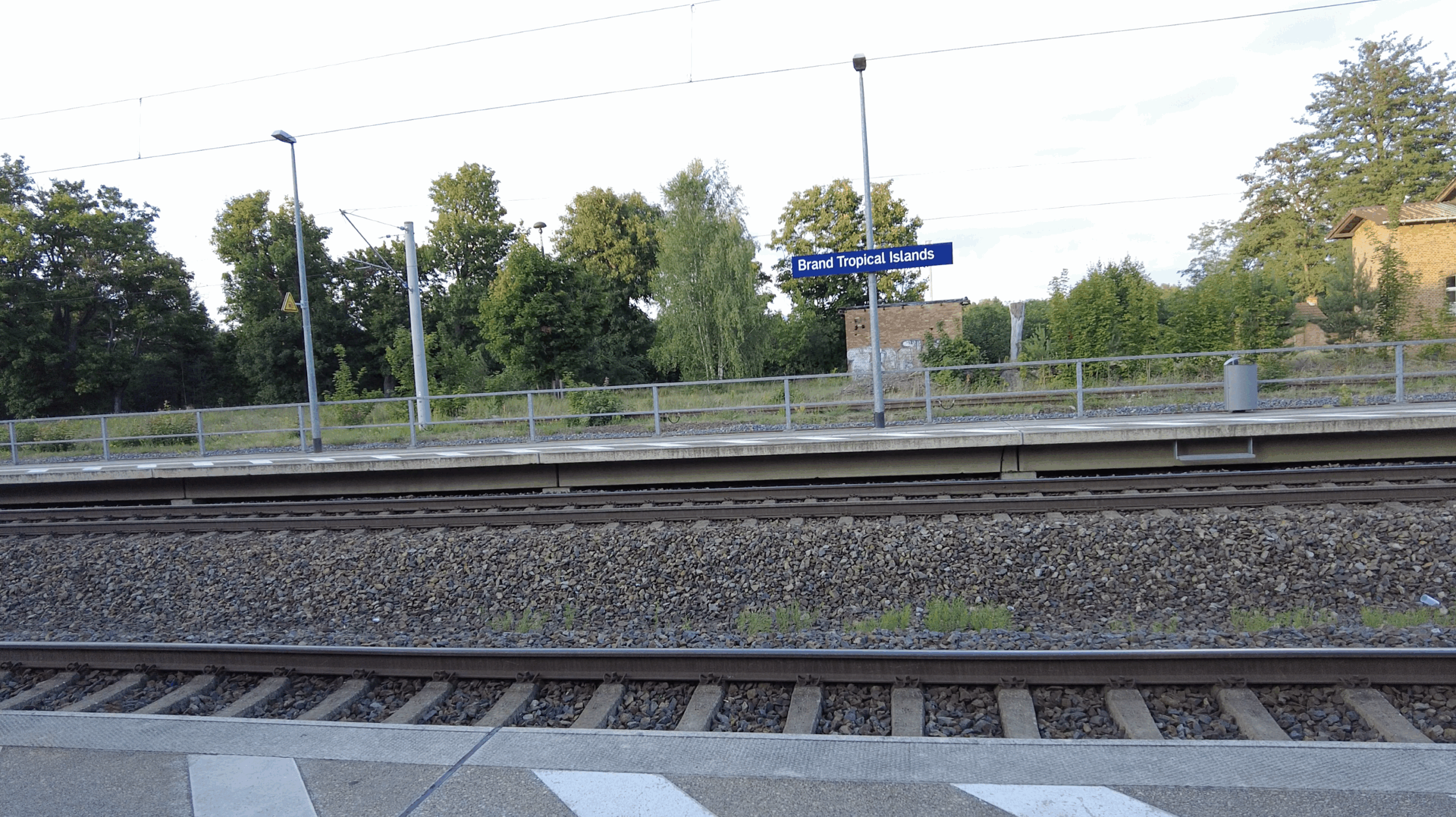
我記得柏林開始變冷的第一天。我穿著平時穿的布鞋,和Marina步行到宿舍附近的二手市場,寒氣降臨大地,每一口呼吸都無比冷冽,回程的路上,我的雙腳冷到發痛。二月,柏林下著不小也不大的雪,我穿著在台灣的夏天時媽媽拖著我去買的鵝絨大衣(他從沒看過雪,在他的想像裡,寒冷似乎是一種威脅與恐懼),我上了台灣沒有的雙層火車,依照慣例坐在第二層,把腳放在暖氣上。”Next Stop, Tropical Island ”,我下了車,在名為Tropical Island的迷你火車站,接著徒步穿過積雪的森林,一顆巨大的蛋形建築出現在白雪皚皚的曠野之中,遠方佇立一根鐵做的棕梠樹。建築門口掛著大大的「熱帶風格綠色調」”Tropical Island ”招牌,一踏進大門,熟悉的熱帶濕氣撲鼻而來,溫暖的空氣迅速將身體包圍,鵝絨大衣瞬間顯得多餘,彷彿門外前一步的乾燥急凍都只是幻覺。
這裡是一座永恆的夏日島嶼樂園,有泰國的傳統建築、薩摩爾的涼亭、新加坡的餐廳、哈瓦娜的街區、柬埔寨的拱門、熱帶植物園……,紅鶴在水池裡漫步,不知名的鳥兒在人造海灘上飛行,海灘的對面是像《楚門的世界》最後的那片巨大藍天白雲布景,但已經褪色有點發紫了。放眼望去幾乎都是成群結隊淺色皮膚的人類,穿著五顏六色的夏日泳裝,獨自一人深色皮膚的我,感到有點不自在,晃進了較少人的植物園裡。
我問了負責照顧植物園的工作人員,這裡有種芒果樹嗎?他是一位不太會說英文的德國女性,我開始用很破的德文混雜英文和他交談,他指向小徑的盡頭說,那裏曾經有一棵芒果樹,但後來死了。他說這個工作不好做,他住在布萊登堡。看著他澆水的身影,我想起了賈樟柯的電影《世界》,在北京世界公園裡工作的小桃與太生。「這些接近真實大小的世界座標建築,整個公園就是一個後現代擬像。…在擬像的超真實世界裡,擬像提供我們真實的一切符號,人們身處在後現代的影像世界中,擬像取代了複製與再現,他們是意義消失的地方,是我們無法判斷何謂真實所在。」看完那部電影後讀的一篇文章這樣寫到。我記得小桃與太生在電影的最後一起燒炭自殺了。
我花了幾個小時,試圖走完整座樂園的每個角落,我很震驚,人類對於他方的「渴望」,竟可以強烈到組成一個巨大的「實體」(相比之下,之前在台灣拍攝的《環遊世界》社區,根本小的不算什麼),這個實體由所有對於熱帶島嶼的「想像」組成,這些去脈絡的想像將他方塑造成美好的「他者」,而這座人造的熱帶島嶼就這樣浮現在歐洲大陸的慾望之海上。另外,這座樂園其實是一種寄居,這個玻璃巨蛋建築的前身是飛艇的建造場。飛艇作為「過去」的人類社會對於「未來交通工具」的美好想像,在1990年代盛行,曾經是人類對於空中環遊世界的幻想,以及進入未知領域的空中殖民工具,但飛艇的速度太慢,最終還是被不斷加速的人類社會所淘汰。未完成的飛艇為這座玻璃巨蛋標示著一個想像的大落空,彷彿人類無法承受這樣的空虛,接著就由對熱帶島嶼的想像將空間補足,盡可能的填滿快樂與歡笑聲。
不知道是不是想滿足飛行的渴望,”Tropical Island ”裡有一顆熱氣球,靠著加熱空氣以及由親切的男性工作人員將繩子繫在腰上,徒步帶遊客環遊一圈樂園。19世紀巴黎的萬國博覽會就曾以熱氣球載遊客上空中,鳥瞰整個博覽會的景象;同時期的探險小說如 ”5 Weeks On The Balloon” 以熱氣球進行歐洲中心主義的殖民式異域探險,從居高臨下的空中掌握「自然風景」,安全的觀察「野蠻民族」。我心想如果想親身體會當時殖民者的心態,沒有甚麼比搭乘這個熱氣球還適合了,於是我付了49歐就為了那15分鐘的空中飛行。我站在籃子裡,熱氣球搖晃升空,隨著高度上升,我能看見整個樂園的布局與景象,往上看不見天空,只有一片片巨大的玻璃,別擔心,這裡沒有颱風、沒有地震、沒有雨季,這是一座被圓頂所包覆的永恆晴朗之島。俯看著地面密密麻麻的人們,我好奇他們有去過真正的「熱帶島嶼」嗎?沒有的話會想去嗎?還是付50歐門票來樂園就好?下了熱氣球我問工作人員你這樣背著熱氣球會很重嗎?他笑著說還好,差不多十公斤左右。
等待回程的火車月台上,我看見負責飛熱氣球的那位工作人員,他戴著全罩式耳機,穿過剛從樂園離開的、歡樂嘈雜的遊客們,避免和任何人眼神接觸,走到月台的最邊邊靜靜地滑著手機,我很想和他聊天但最後還是決定不要打擾他好了,於是我們上了不同的車廂,火車載著人們前往下一個地方。
這次我坐在一樓,面對車門的位置,冷氣強的不像話,我把防風外套穿上拉鍊拉到最高。車門打開,明亮的陽光穿進車廂內,被切割成幾何的形狀,門外的熱氣蒸騰,籠罩著一層霧,霧的後面是三棵高大的椰子樹,剛剛好的被框在車門的景框內,我想起了Sera的作品,那年看過他的作品我才知道台灣的椰子樹是日本殖民時期為了塑造「南洋形象」而種的。不知道從何時開始才注意到,所有眼前可見的「相」都不僅只是那樣而已,「相」的組成是跨越時空的,遠比我們想像的還要複雜許多。「植物在歷史上跨越大陸的旅行,背負著人類所賦予的政治、殖民等包袱。」在漫長的火車車程上,我剛好在讀環境歷史學家李潔珂寫的《離散的植物》,下一站的車門打開,這次框在車門內的,是成群的香蕉樹,像大扇子的葉片隨風搖曳,於是我不禁又開始想,那香蕉樹是從哪來的呢?不管是椰子、香蕉還是芒果,都被粗暴的當作一種「熱帶」的符號,符號的形成是對他者的渴望、化約與想像,想起我在英國駐村時做的芒果煮飯計畫,心中浮現了我邀請英國觀眾一起坐在台灣的芒果樹下乘涼的畫面,在人類給予的符號和包袱之前,植物可是很豐盛的喔。
我在嘉義下了車,我想我還未習慣「東方小島」的生活,我忘記了,除了刺熱的太陽之外,還有全身上下由內而外發燙的熱,彷彿身體是一台運作過久的蒸汽機,好久不見的玄問我回台灣後適應得如何?
「大概平均每周中暑一次吧!」
他一邊捲菸一邊問:「中暑是什麼感覺?」
「熱氣全都悶在身體裡,頭痛欲裂。」我說
他問我要抽菸嗎?我說我戒菸了,他有些驚訝的問為什麼?我有點不知如何解釋,簡化的說到「去年底我獨自一人在雪中爬山,太美了,然後我就覺得我不需要菸了。」他好奇的問我關於冰天雪地的一切,我說我站在雪中哭了,因為太美了,不只是到處積雪,連湖水都結冰了呦,還有我的水袋的吸管……,路上的反光鏡上還可以看到雪花欸,而且雪其實就是很冰的沙子喔!他問說那山裡是什麼樣的聲音呀?我說,是我從來沒有體驗過的寂靜,歐洲的朋友說是因為雪會吸聲音。玄瞪大眼睛,不知道他的腦袋裡正在如何組織那個冰天雪地的想像呢?
在嘉義的一天晚上,我們躺在床上聊了許多各自對於夢境的紀錄與探索,聊到在夢裡,所有的角色都是做夢者本身,所有的影像都是一則則訊息,有些夢想傳遞類似的訊息,只是用不同的影像和情節反覆出現,夢與現實互相擬像,玄說他在ptt上看到如果想做清醒夢的話,平時可以時不時問自己「我現在是在作夢嗎?」,接著有一個瞬間,我們互相問對方:「所以我們現在是在夢裡嗎?」接著有數秒鐘的沉默,彷彿再長一些時空都會開始扭曲,會變成冰天雪地的樣子,也會變成熱帶島嶼的樣子,原來,人類做的夢就是這樣成為現實的擬像的嗎?好讓我們在現實裡體驗夢裡渴望的事物嗎?夢成為現實的時候,那還是夢嗎?現實又還是現實嗎?
今年的冬天會待在台灣,我想我會等待百貨公司裡降下的第一場人造雪,到時候再和玄相約去看雪吧!
—–
“Welcome back to the Eastern Island!”
A year later, I returned to Taiwan, and on the day we swam in the Pacific Ocean, Lei said this to me.
We swam to the rocks in the middle of the bay, and he played the jaw harp, singing a Tayal song about the sun. I closed my eyes, listening to his voice while feeling the sun’s heat against my skin, breathing in the sticky salt and dense humidity. I remembered last month when I was in Norway at 10 degrees, sitting in the sauna with Sondre. “Do you feel your skin getting hot? Remember this feeling; this is Taiwan’s sun!” I told Sondre, who had never been to the “subtropical Eastern Island.” He expressed surprise; it must be hard for him to imagine such piercing heat really exists, right? And what about Lei, who had never been to the “temperate Western continent”? How does he imagine that land? How does he simulate the feeling of snow? How do we define the East, and what is the West? Why does a circular surface world have a center?
I think this is why Germany’s “Tropical Island” calls me to come.
“Mom, I dreamed I was in a train station, walking around, weaving through layer upon layer of platforms. It was a train station that led to the world, a world where all continents were connected. I was far from you, but after getting on the train, I’d return to our island after just five stops; it’s really not that far. The whole train was headed to the tropical island, an island you could reach without flying or taking a boat, a timeless summer island.”
Wandering through Berlin’s main train station, the announcements echoed between the stacked platforms. German trains (DB) are notoriously late, but perhaps what people don’t know is that they can take you anywhere.
I remember the first day Berlin started to get cold. I was wearing my usual fabric shoes and walked with Marina to a secondhand market near our dorm. The chill descended upon the land, and every breath was extraordinarily sharp; on the way back, my feet felt painfully cold. In February, when it snowed in Berlin, I wore the down coat my mom had dragged me to buy in Taiwan during summer (she had never seen snow, and in her imagination, cold seemed a threat and fear). I boarded a double-decker train that Taiwan doesn’t have, as per habit, I sat on the second level, putting my feet on the heater. “Next Stop, Tropical Island.” I got off at a mini train station named Tropical Island and then walked through the snow-covered forest. A huge egg-shaped building appeared in the snowy wilderness, and off in the distance stood a palm tree made of iron. A big sign saying “Tropical Island” in a “tropical style green tone” hung at the entrance of the building. The moment I stepped through the door, the familiar humid tropical air hit me; the warm air quickly enveloped my body, and the down coat instantly felt excessive, as if the dryness and cold just outside the door were merely an illusion.
This is an eternal summer island paradise, with traditional Thai architecture, Samoan pavilions, Singaporean restaurants, Havana neighborhoods, Cambodian arches, tropical botanical gardens… Flamingos stroll in the ponds, unknown birds fly over the artificial beach, and across the beach is a huge blue sky and white cloud backdrop like the final scene in “The Truman Show,” although it has faded and turned a bit purple. Looking around, there were almost swarms of light-skinned people, dressed in colorful summer swimsuits, while being the only one with dark skin, I felt somewhat uncomfortable, drifting into a less crowded botanical garden.
I asked the staff responsible for the botanical garden if there were any mango trees here. She was a German woman who didn’t speak much English. I started to converse with her in broken German mixed with English; she pointed to the end of the path and said there used to be a mango tree there, but it died later. She mentioned that this job is difficult; she lives in Brandenburg. Watching her water the plants reminded me of the film “The World” by Jia Zhangke, where Xiao Tao worked in a theme park in Beijing alongside Tai Sheng. “These life-size world coordinates of buildings; the entire park is a postmodern simulacrum… In the hyper-real world of simulacra, the simulacrum provides us with real symbols. People are situated within the postmodern world of images, where simulacra replace reproduction and representation; they are places where meaning disappears, and where we cannot judge what is real.” I read an article that said this after watching that film. I remember Xiao Tao and Tai Sheng committed suicide by carbon monoxide poisoning at the end of the movie.
I spent a few hours trying to walk through every corner of the park, and I was astonished that human “longing” for the other could be so strong as to form such a vast “entity” (compared to the previous “Around the World” community I filmed in Taiwan, which was really insignificant). This entity was made up of all imaginations of tropical islands, which are decontextualized fantasies transforming the other into an ideal “other,” and this artificial tropical island emerged from the sea of desires in the European continent. Moreover, this paradise is in fact a kind of residency; this glass egg structure was originally a airship manufacturing site. airship represented the past human society’s beautiful imaginings of “future transportation” and were popular in the 1990s; they once embodied the fantasy of humans traveling freely through the sky and a tool for aerial colonialism into unknown territories. However, their speed was too slow and were eventually phased out by an increasingly fast-paced human society. The unfinished airship marked this glass egg with a great void of imagination, as if humanity cannot withstand such emptiness, only to have this void filled with the imagination of tropical islands, attempting to bring as much joy and laughter as possible.
Maybe to satisfy the desire for flight, the “Tropical Island” features a hot air balloon that transports tourists around the park, with warm air and a friendly male staff member tying the rope around his waist. In the 19th century, the World’s Fair in Paris used hot air balloons to give tourists a bird’s eye view of the entire fair. Adventure novels of the same period, like “5 Weeks on a Balloon,” involved colonial-style exotic explorations centered on Europe, looking down from above to grasp “natural landscapes” and safely observe “savage nations.” I thought if I wanted to experience the mindset of colonizers back then, there was nothing more fitting than riding this hot air balloon, so I paid 49 euros for a 15-minute flight. I stood in the basket, the hot air balloon swayed upward, and as we ascended, I could see the layout and scenes of the entire park. Looking up, I couldn’t see the sky, only large panes of glass; don’t worry, there are no typhoons, no earthquakes, and no rainy seasons here; this is an eternally sunny island covered by a dome. Looking down at the densely populated ground, I wondered if they had ever been to a real “tropical island.” If not, would they want to go? Or is it good enough for them to pay 50 euros for the admission to this park? Upon descending from the hot air balloon, I asked the staff if it was heavy carrying the hot air balloon. He laughed and said it was okay, about ten kilograms.
On the platform waiting for the return train, I saw the staff member responsible for the hot air balloon, wearing full-coverage headphones, weaving through the happy and noisy tourists just leaving the park to avoid making eye contact with anyone, walking quietly to the edge of the platform to check his phone. I really wanted to chat with him but ultimately decided not to disturb him, so we boarded different carriages, and the train carried people to the next destination.
This time I sat on the first floor, facing the doors, where the air conditioning was absurdly strong. I put on my windproof jacket and zipped it up to the top. When the doors opened, bright sunlight flooded the carriage, cut into geometric shapes, and the heat outside rose, shrouding everything in mist. Behind the mist were three tall coconut trees framed perfectly in the door’s view. I thought of Sera’s work; the year I saw her work, I learned that Taiwan’s coconut trees were planted during the Japanese colonial period to shape a “South area image.” I don’t know when I started to notice that everything visible before me is not just that; the composition of “appearance” transcends time and space and is much more complex than we imagine. “Plants’ historical journeys across continents carry the burdens of politics, colonialism, and more assigned by humanity.” During the long train ride, I happened to be reading “Dispersed Plants” by environmental historian Li Jieke. When the door to the next station opened, what was framed in the door this time was a cluster of banana trees, their leaf-like fans swaying in the wind, and I couldn’t help but begin to ponder, where do those banana trees come from? Whether it’s coconuts, bananas, or mangoes, they are roughly treated as a type of “tropical” symbol. The formation of symbols reflects the longing, reduction, and imagination of the other. I remembered my mango cooking project when I was an artist-in-residence in the UK, and an image surfaced in my mind of inviting British audiences to sit in the shade of mango trees in Taiwan; before the symbols and burdens that humanity imposes, plants themselves are quite bountiful.
I got off the train in Chiayi. I think I’m still not accustomed to life on the “Eastern Island.” I had forgotten that, aside from the scorching sun, there is also a heat that burns from the inside out, as if my body is a steam engine that has been in operation for too long. It had been a while since I last saw Xuan, who asked me how I adapted after returning to Taiwan.
“I guess I get heatstroke about once a week!”
As she rolled a cigarette, she asked, “What does heatstroke feel like?”
“The heat is all trapped inside my body; my head feels like it’s splitting.” I said.
she asked if I wanted to smoke. I said I had quit, and she looked a bit surprised and asked why. I didn’t quite know how to explain it, simply saying, “At the end of last year, I climbed a mountain alone in the snow; it was so beautiful that I felt I didn’t need cigarettes anymore.” She curiously asked me everything about being in the icy, snowy world, and I said I cried standing in the snow because it was so beautiful—it wasn’t just snow everywhere; even the lakes were frozen, and even the straw of my hydration bladder… the reflections on the mirrors on the road still showed snowflakes! Furthermore, snow is actually just very cold sand! She asked what the sounds in the mountains were like. I said it was a kind of silence I had never experienced before. European friends say it’s because snow absorbs sound. Xuan’s eyes widened, and I wondered how she was organizing that vision of the icy and snowy world in her head.
One evening in Chiayi, we lay in bed chatting about our records and explorations of dreams, discussing how in dreams, all characters are the dreamer themselves, and all images are messages. Some dreams convey similar messages, just appearing repeatedly with different images and plots, where dreams and reality simulate each other. Xuan mentioned she saw on PTT that if you want to have lucid dreams, you can occasionally ask yourself, “Am I dreaming now?” Then at one moment, we asked each other, “So are we dreaming right now?” After a few seconds of silence, it felt as though extending our time and space would start to twist, becoming icy and snowy, or it could also become a tropical island. Is it true that the dreams created by humanity are how we experience desired things in reality? When dreams become reality, is it still a dream? Is reality still reality?
This winter, I will stay in Taiwan, and I suppose I will wait for the first artificial snow to fall in the department store, and then I’ll ask Xuan to go see the snow with me!
發佈留言